The Centre has circulated a blueprint for next-generation Goods and Services Tax (GST) reforms — a move that could redefine the way India consumes and pays taxes. At the heart of the proposal is a simplified two-rate structure of 5% and 18%, along with the introduction of a new 40% slab for sin goods.
Two slabs, one big reset
According to government sources, the Centre has proposed collapsing the current four-slab structure into two principal rates:
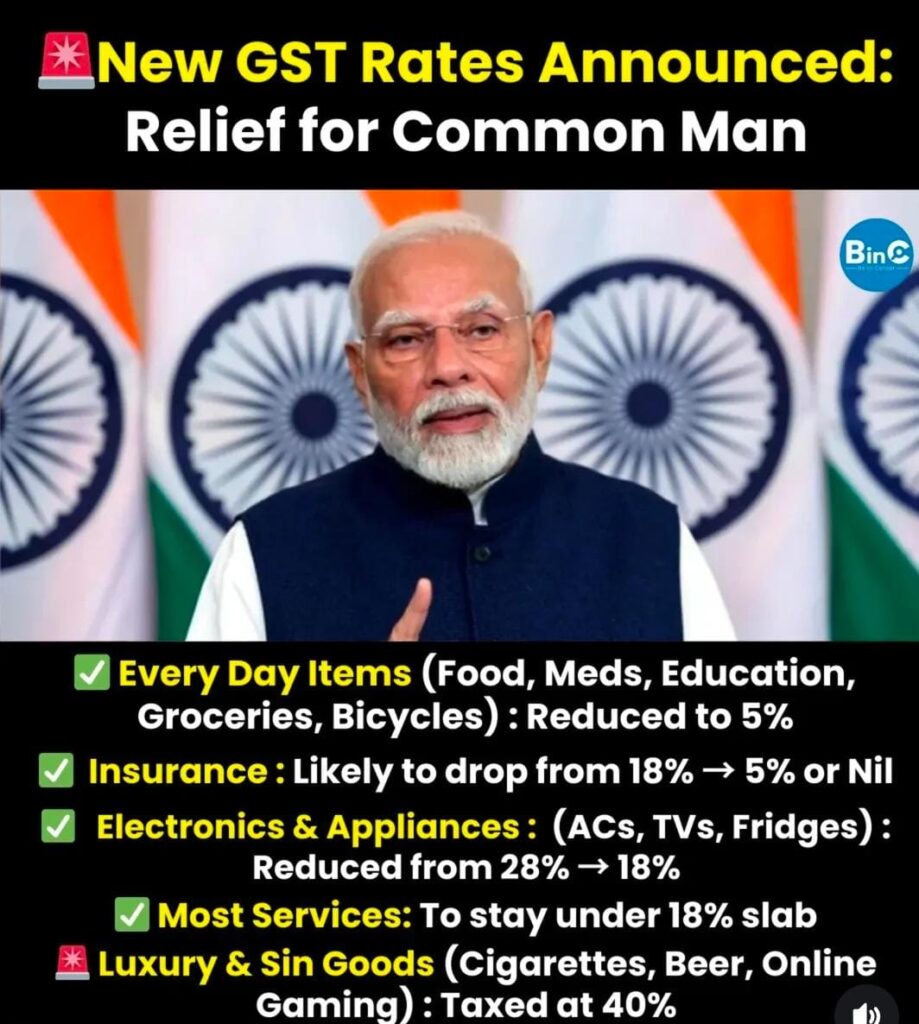
5% Standard Rate for essentials and daily-use goods.
18% Merit Rate for most other goods and services.
The 28% slab will be eliminated.
A new 40% slab will apply only to sin and luxury goods.
What gets cheaper?
Government sources indicate that household goods and insurance premiums could become cheaper, with several items expected to slide from the current 12% slab to 5%.
Items likely to fall in the 5% slab include:
Daily essentials, stationery, exercise books, namkeens.
Packaged food, butter, ghee.
Apparel, footwear, bicycles, eyewear, and even toothpowder.
Medicines and medical equipment could also see their tax rates fall from 12% to 5% or nil.
Another significant relief could come for health and life insurance premiums — currently taxed at 18%, but under the proposal may drop to 5% or nil, reducing household expenses for the middle class.
The government is also looking to correct inverted duty structures in textiles and fertilisers, which would provide additional relief to farmers and consumers.
Consumer durables and automobiles in focus
The blueprint extends to consumer durables and automobiles, with reductions in key categories:
TVs, refrigerators, air-conditioners, and cement: from 28% to 18%.
Two-wheelers below 350cc: from 28% to 18%.
Small cars under 1200cc engines: from 29–31% (GST + cess) to a flat 18%.
Hybrid passenger vehicles: from 28% to 18%.
The 18% slab currently accounts for 65–67% of GST collections and will remain the mainstay.
The 5% slab garners 7%, while the 12% slab contributes 5% — most of which will be moved to 5% or nil.
The 28% slab, which contributes 11%, will largely disappear as 90% of items in this slab are expected to be reduced.
The introduction of the 40% sin goods slab is designed to offset some of the revenue loss.
40% sin goods slab
While most goods may get cheaper, sin and luxury products will face higher taxation. The proposed 40% slab is expected to cover 5–7 items, including:
Pan masala, gutkha, tobacco products.
Luxury cars and SUVs.
Online gaming, which could move up from 28% to 40%.
The Group of Ministers on rate rationalisation and related matters is set to meet on August 20 and 21 to deliberate on the proposals. A final call will then rest with the GST Council.
Officials believe the reforms could act as a Diwali bonanza, in line with Prime Minister Narendra Modi’s Independence Day speech, where he hinted at a simplified GST regime designed to make essentials and aspirational goods cheaper while raising levies on sin goods.